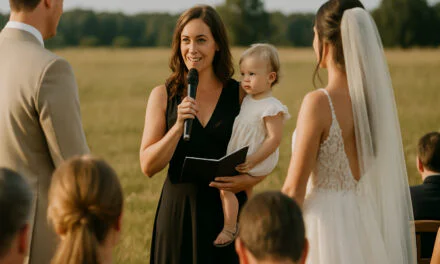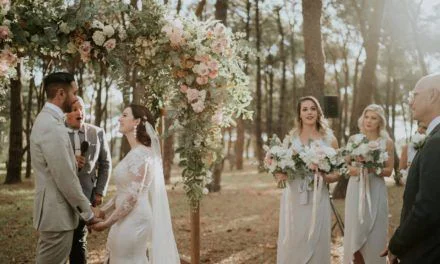

By the time a celebrant actually stands in front of a couple on their wedding day, a lot of the work has already been done. The legal paperwork is in order, the ceremony has been planned with the couple, and everyone involved should know what’s expected of them.
The ceremony itself can then be highly personal. Australian law does not prescribe a fixed wedding ceremony structure, so couples have considerable freedom over what they include and how the day feels. There are, however, several legal requirements that every authorised celebrant needs to get right.
Here’s how the process typically comes together, from the preparation beforehand through to the final paperwork after the ceremony.
Start With the Legal Preparation
Long before the wedding day, the couple must give an authorised marriage celebrant a Notice of Intended Marriage (NOIM). This needs to happen at least one month, and no more than 18 months, before the marriage. The celebrant also needs to check the required evidence of identity, date and place of birth, and – where relevant – that any previous marriage has ended.
Since 2024, the celebrant who will solemnise the marriage has also been required to meet separately and in person with each party before the ceremony. This helps the celebrant ensure that each person is entering the marriage freely and genuinely consenting to it.
Finally, before the marriage is solemnised, the couple must also complete the Declaration of No Legal Impediment to Marriage. This confirms that there is no legal reason preventing the marriage from taking place.
Once all those legal foundations have been covered, attention can turn to what the ceremony itself will actually look like.
Build the Ceremony Around the Couple
There’s no compulsory order for an Australian civil marriage ceremony. Beyond the required legal elements, couples can create something that suits their personalities, relationship, families, and plans for the day. A fairly traditional structure might include the entrance, a welcome, the couple’s story, readings or other contributions, vows, rings, the signing of certificates, the presentation of the newly married couple, and their exit at the end.
My own approach is to give couples ideas and guidance without taking ownership of their ceremony away from them. Some want personal vows, readings, or plenty of guest involvement. Others prefer something short and simple. A celebrant’s job is to understand what the couple wants and create a ceremony that works for them, while still meeting all of the legal requirements.
This planning also involves practical decisions. These can include who has the rings, who carries out any readings, what music will play, where everyone will stand, and so on. In short, for everything that is going to happen during the ceremony, somebody should know how and when it’s actually happening.
Consider Whether a Rehearsal Is Needed
Marriage celebrants are required under the Code of Practice to give couples information that helps them decide whether a rehearsal is needed or appropriate. The rehearsal itself is not compulsory.
For more involved ceremonies, these can be extremely useful. They provide an opportunity to work through the entrance, positioning, readings, vows, rings, signing arrangements, music cues, and movement around the ceremony space, all before there’s an audience watching.
They can also expose practical problems that weren’t obvious on paper. For an outdoor wedding, that could mean sun, wind, noise, access, or the position of the signing table. For an indoor ceremony it could mean ensuring the wedding party will all fit into the ceremony space. Even a relatively straightforward ceremony can benefit from making sure the key participants know where they need to be, and what they need to do.
Get Set Up Before the Ceremony Begins
On the wedding day itself, arriving with enough time to prepare makes the actual ceremony considerably easier.
The celebrant needs to check the ceremony area, prepare the marriage certificates and signing materials, and make sure the most important people are present and ready. It’s also useful to speak with venue staff, photographers, videographers, musicians, or whoever is controlling any recorded music, so that everyone understands the general flow of the ceremony.
The two official witnesses also need to be present. Australian law requires two witnesses who are – or appear to the celebrant to be – at least 18 years old. The couple, celebrant, and two witnesses must all be physically present for the marriage to be solemnised.

Conduct the Legal Parts of the Ceremony
Once any entrance is complete, and the couple is in place, the ceremony can begin.
The celebrant will usually welcome everyone and introduce themselves. For a civil marriage ceremony, the celebrant must make clear that they are the authorised celebrant and deliver the words required under section 46 (1) of the Marriage Act, commonly known as the monitum. The monitum must be delivered before the couple exchange their legal vows.
Each party must then say the legal vows required under section 45 (2) of the Act, or permitted words to the same effect. These words must actually be spoken by each person, so simply asking a question and having them answer “I do” does not replace the legal vows. The parties’ names, as recorded on the NOIM, must also be stated before or during this part of the ceremony.
Personal vows can be added here, provided they do not contradict the legal vows. Rings are optional, as is the familiar moment when the celebrant formally pronounces the couple married. Even though those elements may feel central to a wedding ceremony, they aren’t what makes the marriage legally valid.
Complete the Signing and Finish the Ceremony
After the vows are completed, the couple, the two witnesses, and the celebrant sign the three marriage certificates required for the ceremony. The celebrant then gives the couple their presentation certificate, also known as the Form 15.
From there, the ceremony can finish however the couple wants. There might be a final blessing or a few closing words before the couple is presented to their guests and heads back down the aisle.
The celebrant’s responsibilities still continue after everyone else starts celebrating. The marriage paperwork must be submitted to the relevant state or territory registry of births, deaths and marriages within 14 days of the wedding.
Learning to Conduct a Wedding Ceremony
There’s certainly a lot happening beneath the surface of a good wedding ceremony. A celebrant has to manage the legal requirements accurately, while also writing, organising, presenting, and adapting a ceremony around the specific people standing in front of them.
That combination of legal knowledge and practical ceremony skills is a major part of our Certificate IV in Celebrancy (CHC41015). Students work through the requirements of marriage celebrancy, and complete practical assessments including simulated interviews, rehearsals, and ceremony performances, rather than only learning the process in theory.
By the time you conduct a real wedding, the aim is not simply to know which words need to be said. It is instead to understand the entire process well enough that the legal requirements, ceremony, people, and practical details all come together naturally.