
A funeral celebrant has a crucial responsibility. Their role is to help families say goodbye to someone they love, in a way that reflects who that person was and what they meant to the people around them.
While most people associate celebrants with weddings, many also conduct funerals and memorial services. The work involves much more than simply standing in front of mourners and delivering a speech. Funeral celebrants meet with families, gather personal stories, write and organise ceremonies, coordinate with funeral directors, and guide people through what can be an extremely difficult occasion.
For anyone considering funeral celebrancy, it’s worth understanding what that work actually involves in practice, from the first conversation with a family through to the ceremony itself.
Meeting the Family
A funeral celebrant’s work usually begins with a referral from a funeral director, although families can also approach celebrants directly. Once the arrangements are confirmed, the celebrant meets with the family, and sometimes close friends, to discuss the service. This is an opportunity to understand what they want from the ceremony, including its tone, structure, and any religious or cultural elements they would like incorporated.
Much of the conversation will naturally centre on the person who has died. A celebrant might ask about their childhood, relationships, career, interests, achievements, personality, and the memories that best capture who they were.
It isn’t simply a matter of gathering biographical information, however. A good celebrant listens carefully, asks thoughtful questions, and gives people room to share what they feel comfortable discussing. Different family members may have very different memories and perspectives, all of which can contribute to a fuller picture.
We place a particular emphasis on listening during these meetings. Families may be grieving intensely, and a celebrant needs to recognise when to ask further questions, when to give someone time, and when a particular subject is too difficult to pursue.
Celebrants should also be prepared to offer suggestions for ceremony inclusions. Many people have never planned a funeral before and have no idea what is possible. Along with a family’s own thoughts for how the ceremony should run, a celebrant’s suggestions can round out a fitting tribute to their loved one.
Celebrants should understand grief and communicate compassionately, even though they’re not grief counsellors. Their professional responsibility is ultimately to help the family create an appropriate ceremony, while respecting the emotional circumstances in which those decisions are being made.
Writing and Planning the Ceremony
Once the celebrant has gathered the necessary information, they can begin developing the ceremony.
There’s no single prescribed structure for a civil funeral. A service might include a welcome, an account of the deceased person’s life, personal tributes, readings, music, photographs, moments of reflection, and closing words.
Some families want a traditional, solemn occasion. Others prefer something more informal, with humour, favourite songs, and stories that capture the deceased person’s character. Religious readings or prayers may also be included, if the family wishes. The celebrant’s role is to help organise these elements into a coherent service that honours the family’s preferences.
Writing the eulogy/life story may be part of that work, although it isn’t always the celebrant’s responsibility. Sometimes a family member or friend wants to write and deliver it themselves. In other cases, the celebrant may prepare the eulogy using information gathered during the planning meeting and someone else may deliver it.
The celebrant also helps organise contributions from other speakers. Someone who wants to pay tribute, but is worried about becoming overwhelmed, may prefer the celebrant to read their words on their behalf.
Once the script is drafted, it should be shared with the family for review. Names, dates, personal details, and sensitive wording all need to be accurate, and families should have the opportunity to request changes before anything is said publicly.
Working With Funeral Directors
Funeral celebrants and funeral directors work closely together, but their responsibilities are different.
The funeral director generally manages the wider logistical arrangements, including caring for the deceased, organising transport, coordinating burial or cremation, handling the relevant documentation, and managing the practical requirements of the funeral. The celebrant, meanwhile, concentrates primarily on developing and conducting the ceremony itself.
That being said, there is still considerable overlap when it comes to organising the service. Celebrants may need to coordinate with funeral directors about the timing, venue, music, speakers, audiovisual equipment, and any special requests from the family.
Communication is especially important here, because funerals are often arranged within a relatively short period. Unlike weddings, which may be planned many months in advance, a funeral celebrant might have only a few days to meet the family, prepare the script, and finalise the ceremony.
The celebrant therefore needs to be organised, responsive, and comfortable working alongside other professionals. They must also maintain confidentiality, particularly when handling sensitive family information or arrangements for private services.
Conducting the Funeral Service
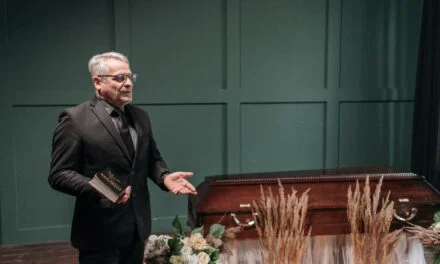
On the day itself, the celebrant is responsible for presenting the ceremony and guiding everyone through its planned proceedings.
This can involve welcoming mourners, delivering the opening words and eulogy, introducing family members and friends who are speaking, presenting readings, and providing appropriate transitions between music, tributes, and other elements. Depending on the arrangements, the celebrant may also conduct a committal at the graveside, or lead a separate memorial ceremony where the deceased person’s body is not present.
Preparation is important, but so is adaptability. A speaker might become too emotional to continue, an audiovisual presentation might not work as planned, or the family may need a little more time during a particular part of the service. The celebrant needs to remain composed throughout, communicate clearly, and work with the funeral director and venue staff to keep the ceremony running appropriately.
That requires a careful balance of warmth and professionalism. The occasion may be deeply emotional, but the celebrant’s role is to provide steady guidance and make space for the family’s grief, rather than becoming the centre of attention.

What Training Do Funeral Celebrants Need?
Unlike marriage celebrancy, funeral celebrancy in Australia does not require government registration or a specific qualification. The absence of a formal registration requirement, however, should not be mistaken for an absence of professional responsibility.
Funeral celebrants need strong communication, writing, presentation, and organisational skills, alongside an understanding of grief, funeral customs, and working with bereaved families. Formal training can help develop those skills before someone takes responsibility for their first service.
At the Celebrant Institute, we offer a dedicated professional development course on funeral celebrancy, led by Sarah Aird. It covers the funeral client journey, the celebrant’s responsibilities, and the practical processes involved in preparing and presenting ceremonies, with scripts, checklists, and planning resources included.
Is Funeral Celebrancy Right for You?
Funeral celebrancy can be deeply rewarding work, but it also demands emotional maturity, careful preparation, and a willingness to support people during difficult circumstances. A funeral celebrant needs to understand the person being remembered, respect the wishes of those closest to them, and turn that understanding into a ceremony that feels appropriate and personal.
For someone who enjoys working closely with people, writing, public speaking, and providing guidance during important life events, it can be a valuable and fulfilling area of celebrancy to pursue. And with the right preparation and training, you can develop the skills needed to approach that responsibility with confidence and care.